ยินดีต้อนรับเข้าสู่เว็บไซต์

Understanding the Matching Principle in Modern Accounting


While both IFRS and GAAP adhere to the Matching Principle, they may have differences in their specific rules and guidance for revenue recognition and expense allocation. IFRS and GAAP are two prominent accounting frameworks used globally, including in India. IFRS is a set of accounting standards issued by the International Accounting Standards Board (IASB), while GAAP is a common set of accounting principles and guidelines used in the United States.
Matching Principle & Concept

$4,000 of the estimated current tax charge relates to prepaid income which shall be recognized in the subsequent accounting period. Consequently, $4,000 must be subtracted from the tax expense calculation and matched against the accounting profit earned in the next https://www.bookstime.com/articles/net-cash-flow-formula year. Therefore, the tax expense for the year of $40,000 may also be derived by applying the tax rate of 40% to the profit before tax of $100,000. The matching principle is a standard accounting practice for documenting receipts and costs. This notion recognises that businesses must make investments in order to generate revenue. Also, when your financial statements accurately reflect a company’s financial health, it boosts your investor and creditor confidence.
Revenue Recognition and Expense Matching

Thank you for reading this guide to understanding the accounting concept of the matching principle. Besides commissions, there are several examples of this principle, such as depreciation, employee bonus, and wages. For instance, if you are a roofing contractor and have finished work for a client, the fees have been earned by your company.
- The matching principle is a key component of accrual accounting but is not used in cash basis accounting.
- Our solution has the ability to prepare and post journal entries, which will be automatically posted into the ERP, automating 70% of your account reconciliation process.
- The rules discussed seem to be conditioned on the degree of the relationship between payers and payees.
- Thus, a taxpayer using the accrual method can deduct a note issued to a related cash-basis taxpayer that would be required to include it in income under the constructive receipt doctrine.
- PP&E, unlike current assets such as inventory, has a useful life assumption greater than one year.
- Business runs with the well-known concept that in order to make money, it is essential to spend money.
- Based on the Matching Principle, the cost of goods sold amount $40,000 have to be recorded in December 2016, same as revenue of $70,000 recognized.
Matching Vs Accruals Vs Cash Basis
- The company can choose to depreciate the machine over its useful life by dividing the cost of the machine by 5, which works out to Rs.2,000,000 per year.
- The matching principle is a key element of the accrual basis of accounting and adjusting entries, in which a business matches expenses with its related revenues for a given accounting period.
- However, in the 15th century accrual accounting was developed to show companies’ financial performance consistently over time, which relies heavily on the principle of matching.
- Automation tools help you capture expenses and link them to corresponding revenue with precision timing.
- Cash flow statements, though focused on cash transactions, are indirectly influenced by the matching principle.
To sum up, the Matching Principle is a fundamental accounting concept that ensures expenses are recognized in the same period as the related revenues. It is based on the accrual accounting method and is essential for accurate financial reporting. By matching expenses with the related revenue, companies can accurately assess their profitability and make better decisions.
For example, if a business pays a 10% commission to sales representatives at the end of each month. If the company gross vs net has $50,000 in sales in the month of December, the company will pay the commission of $5,000 next January. To illustrate the matching principle, let’s assume that a company’s sales are made entirely through sales representatives (reps) who earn a 10% commission. The commissions are paid on the 15th day of the month following the calendar month of the sales. For instance, if the company has $60,000 of sales in December, the company will pay commissions of $6,000 on January 15.
A positive cash flow cannot be reported until year 3 on the company’s financial statements. The image below summarizes how the matching principle is part of the accrual basis of accounting. A business selects a time period for its accounting (year, quarter, month etc) and uses the revenue recognition principle to determine the revenue for that period. Based on this time period and revenue recognized the matching principle is used to determine the expenses to be included. Not all costs and expenses have a cause and effect relationship with revenues.
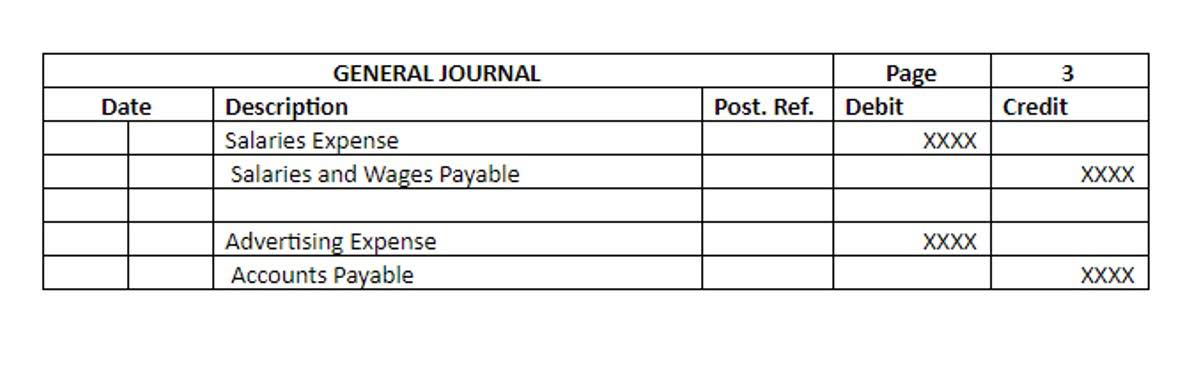
For example, accruals basis of accounting requires the recognition of the estimated tax expense in the current accounting period even though the actual settlement of the provision may occur in the subsequent period. As with wages, sales commission expenses and other employee-related costs to your small business will be recorded during the period in which they’re earned and not when they’re paid when using the matching principle. Should you pay an employee a $2,000 bonus for their excellent work last quarter, for instance, you’ll record that money as an expense for the last quarter and not the current one even though you’re paying out the bonus now. The accrual method of business accounting is an accounting system where your business’s revenue and expenses are recorded when each takes place, rather than when actual payment is made or received. The matching principle simply states that related matching principal revenue and expenses should be recorded together to reflect the direct correlation between money in and money out.
This is particularly relevant for businesses with long-term projects or services, where revenues and expenses may not occur simultaneously. The matching principle, also known as the expense recognition principle, is a fundamental concept in the field of accounting. It states that expenses should be recognized in the same period as the revenues they help generate. This principle ensures that financial statements accurately reflect the relationship between revenues and the expenses incurred to generate those revenues. The matching principle is a fundamental concept in accounting that ensures expenses are recorded in the same period as the revenues they help generate. This principle, commonly used under accrual accounting standards, assists in creating a more accurate financial snapshot by aligning revenues with related expenditures.