ยินดีต้อนรับเข้าสู่เว็บไซต์

Capital Lease: What It Means in Accounting

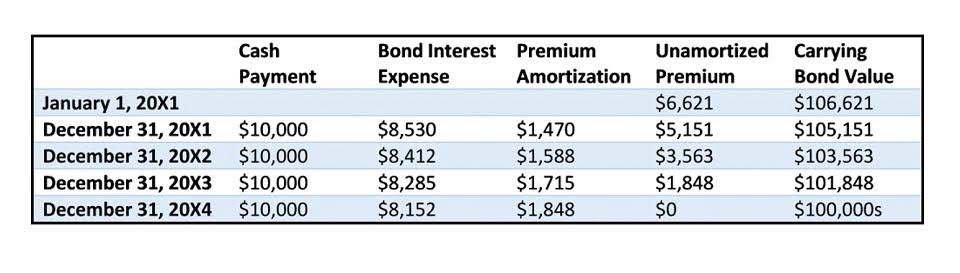
Since firms prefer to keep leases off the books, and sometimes prefer to defer expenses, there is a strong incentive on the part of firms to report all leases as operating leases. (d) if the present value of the lease payments, discounted at an appropriate discount rate, exceeds 90% of the fair market value of the asset. The lessor uses the same criteria for determining whether the lease is a capital or operating lease and accounts for it accordingly. If it is a capital lease, the lessor records the present value of future cash flows as revenue and recognizes expenses. The lease receivable is also shown as an asset on the balance sheet, and the interest revenue is recognized over the term of the lease, as paid.
- Understanding the critical role of RWI in M&A transactions is crucial for business owners and first-time buyers to make informed decisions.
- They don’t have the choice to buy the place when the lease ends; the landlord still owns it.
- Master accounting topics that pose a particular challenge to finance professionals.
- Accruent Lx Contracts is recognized as a leading solution in lease administration.
- Another angle to consider is that lenders or investors might see capital leases as a sign of stability—indicating the business commits to essential production infrastructure.
- You also classify variable payments and interest as operating activities in the cash flows statement, and you classify principal repayments as financing activities.
- An asset’s economic life is calculated by estimating that period of time based on normal usage.
Operating Lease vs. Capital Lease: Key Differences
Before the alteration, leases were either capital or operating leases; with the new standard, capital leases are now called finance leases. However, the accounting calculations for capital-now-finance leases have remained the same. Operating leases, in contrast, are still the same by name but are recognized in a different way. In summary, capital leases are treated more like asset purchases with financing, while operating leases are treated as rental agreements without ownership transfer.

Accounting Jobs of the Future: How Staffing Agencies Can Help Land Them
- The contract allows for the renter to use the asset for a temporary period.
- This helps them make the best lease choices for their financial health.
- A business can lease assets it needs to operate rather than purchase them.
- The primary difference between Capital and Operating Leases is ownership.
- There is no difference whatsoever between the three leases on the ground.
Companies may prefer operating leases operating lease vs capital lease due to their flexibility, lack of long-term commitment, and off-balance sheet treatment, which can make their financial statements look stronger. Accounting for operating leases is typically easier, because most operating leases last 12 months or less and payments are simply recorded as expenses on your P&L. When you make your lease payment, you will debit a lease or rent expense account and credit your checking account. Leasing is a cost-effective way to acquire the use of a fixed asset without purchasing the asset outright. Not understanding the differences between a capital lease and an operating lease can be costly. Learning about the accounting treatment and impact of capital leases helps financial professionals with reporting and compliance.

Operating Lease Example: Office Space Rental
An operating lease is a lease that allows a lessee to utilize an asset for a period of time without the lessee owning it. Whereas the lessee takes on almost all the pros and cons of ownership with a financial lease, the lessor retains these pros and cons over the duration of operating leases. Operating leases are often shorter term leases for things like office business space or equipment. Some business owners dislike operating leases, though, because they will never actually own the leased equipment. And—as is the case with capital leases—you might end up paying more for the lease than you would if you purchased the asset outright.
- The capital lease is structured or designed like that of a purchase or any financing agreement.
- In summary, capital leases are treated more like asset purchases with financing, while operating leases are treated as rental agreements without ownership transfer.
- For this reason, understanding whether a lease is a capital or operating lease matters a lot.
- Ongoing operating lease journal entries will record a lease expense as usual, as well as reducing the lease liability and ROU asset balance over the lease term.
- Switching lease types can be complex and may have financial consequences.
For operating leases, the unearned revenue present value is lower, which is why it can be classified as an operating expense. Capital leases are recognized as both assets and liabilities on the balance sheet, affecting financial ratios. Operating leases are recorded as operating expenses on the income statement and do not appear as liabilities. For operating leases, payments are treated as deductible rental expenses. While this simplifies tax reporting, it doesn’t offer the same depreciation benefits as capital leases. Lease classification under ASC 842 hinges on five specific criteria.

Income Statement Impact
In comparison, operating leases typically have shorter terms, less than 75% of the asset’s useful life, and are often used for assets that require frequent upgrading, such as technology or fleet vehicles. The exact proportions of the credits and debits in step 2 depend on a number of factors and will vary from lease to lease. The tax benefit of a capital lease often comes in the form of accelerated depreciation.
- This means that there will be less deductions to take on future taxable income in the form of depreciation.
- However, the lessee will charge depreciation in their books for the leased asset and claim deduction based on depreciation amount as per the tax laws.
- At the end of the lease term, the business has the opportunity to buy the asset or return it.
- Operating leases are a little easier in terms of accrual accounting.
- A capital lease is treated as debt and entered on the balance sheet by recording the asset value and the liability of the lease.
- In contrast, an operating lease does not transfer ownership rights; assets are returned to the lessor.

As stated above, finance and capital leases are nearly the same in everything but https://www.bookstime.com/articles/financial-reporting-automation name. Leases are classified as ‘finance’ when they have characteristics that make them similar to a purchase of the underlying asset. There are five criteria to consider, any one of which will result in a lease being classified as a finance lease. For example, if the present value of total lease payments are substantially all of the leased asset’s fair value, or the lease term is a major part of the leased asset’s economic life, that will be a finance lease. Finance leases then have imputed interest and are amortized over the life of the lease. The tax implications of leases vary depending on whether the lease is classified as a capital lease or an operating lease.